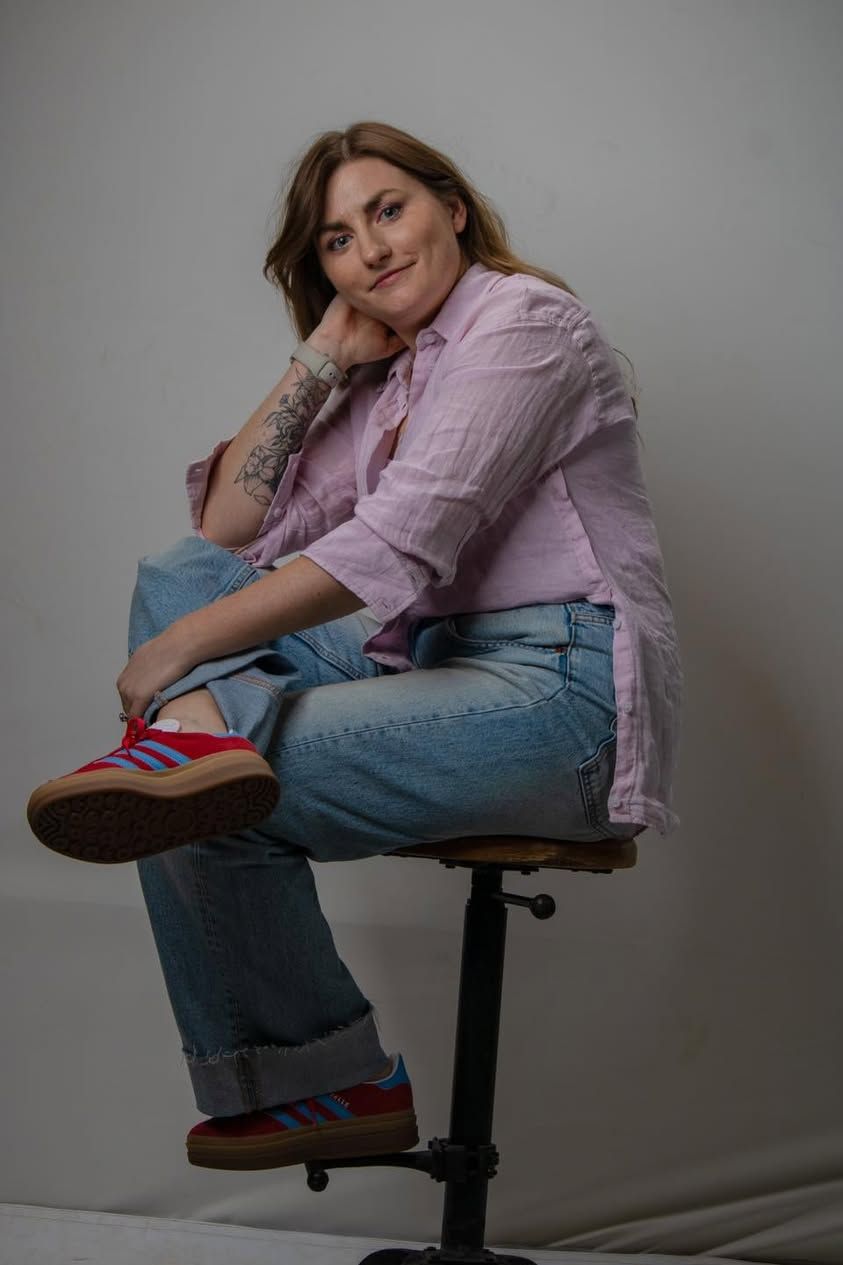
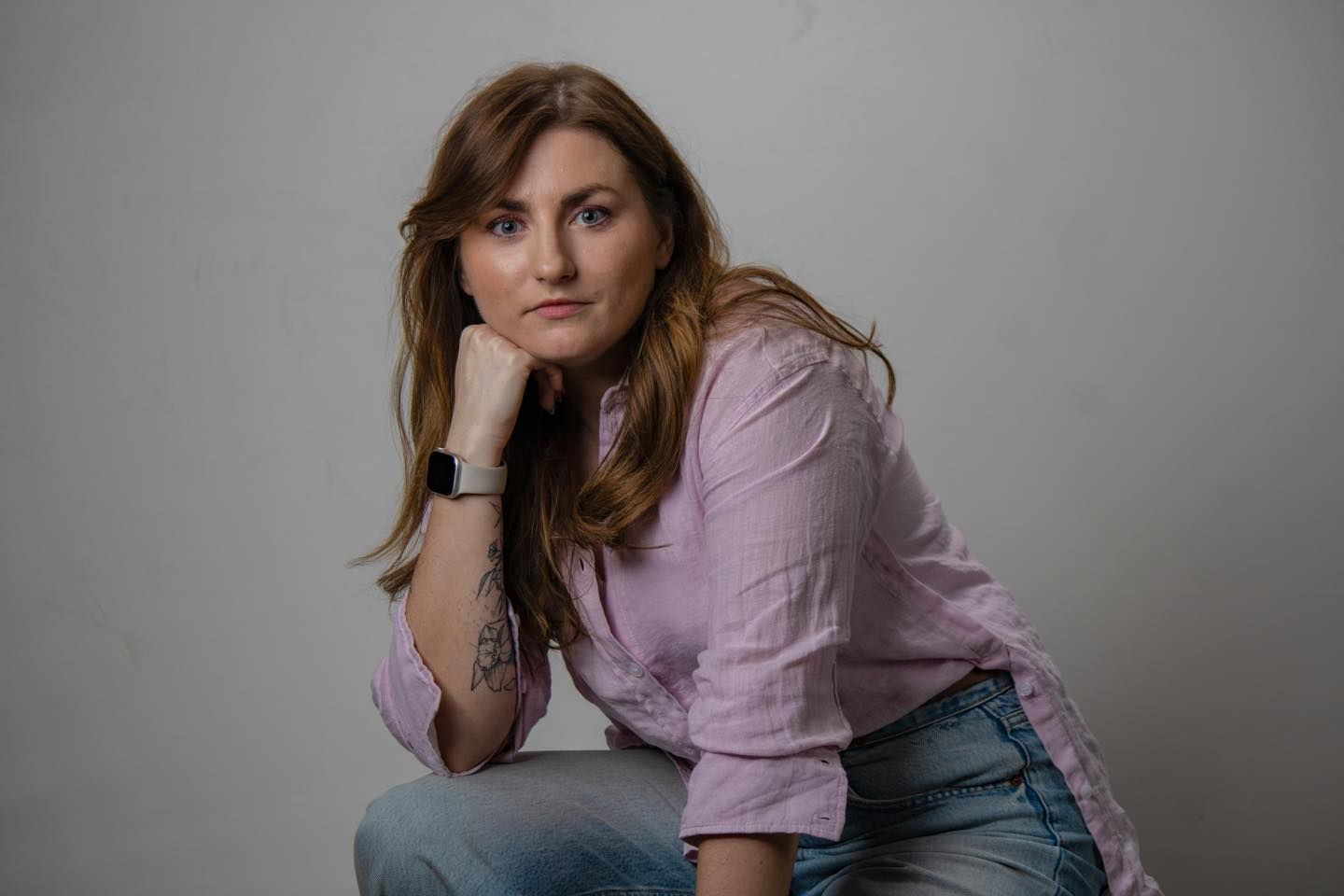
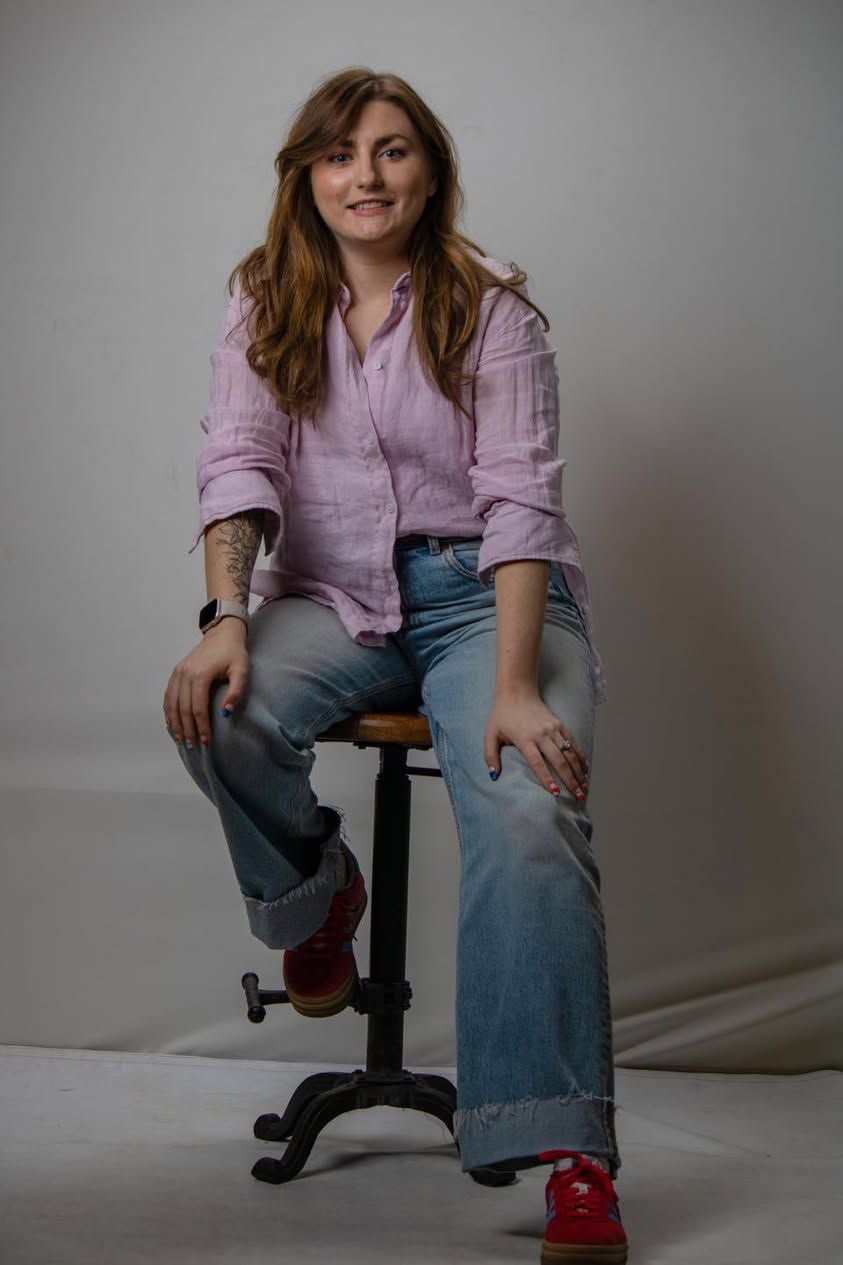
Malwina Aviles’ Story
1. What is your name? My name is Malwina Aviles. My maiden name is Holynska.
2. Write down a few facts about yourself. (Family/job/whatever you like) I am a 35-year old, married, female. I entered US in 2015 and lived in Huron for about 6 years. In 2021 my family and I moved to the countryside of Woonsocket. I have been working at Community Counseling Services for the past 7 years as a Licensed Addiction Counselor. About a year ago I started my own photography and art business in Woonsocket. This year I am moving my business to Huron! I have two rescued pups, husband, 4-year-old daughter and 16-year-old bonus-daughter, who lives in California. I have recently learned; I suffer from an autoimmune disease and have been adjusting to gluten and dairy free lifestyle.
3. What country are you from? I am from Poland, Europe.
4. Tell me some things about your country. The native Polish name for Poland is Polska. The name is derived from the Polans, a West Slavic tribe. Polish territory extends from the Baltic Sea in the north to the Sudetes and Carpathian Mountains in the south, and has a temperate transitional climate, while its longest river is the Vistula.In the mid-1500s, united Poland was the largest state in Europe and perhaps the continent’s most powerful nation. Yet two and a half centuries later, during the Partitions of Poland (1772–1918), it disappeared, parceled out among the contending empires of Russia, Prussia, and Austria.Polish culture remained strong; indeed, it even flourished, if sometimes far from home. Polish revolutionary ideals, carried by such distinguished patriots as Kazimierz Pułaski and Tadeusz Kościuszko, informed those of the American Revolution. The Polish constitution of 1791, the oldest in Europe, in turn incorporated ideals of the American and French revolutions. Poles later settled in great numbers in the United States, Canada, Argentina, and Australia and carried their culture with them. At the same time, Polish artists of the Romantic period, such as pianist Frédéric Chopin and poet Adam Mickiewicz, were leading lights on the European continent in the 19th century.Restored as a nation in 1918 but ravaged by two world wars, Poland suffered tremendously throughout the course of the 20th century. World War II was particularly damaging, as Poland’s historically strong Jewish population was almost wholly annihilated in the Holocaust. Millions of non-Jewish Poles also died, victims of more partition and conquest. With the fall of the Third Reich, Poland effectively lost its independence once again, becoming a communist satellite state of the Soviet Union.
In May 1989 the Polish government fell, along with communist regimes throughout eastern Europe, beginning Poland’s rapid transformation into a democracy.A land of striking beauty, Poland is punctuated by great forests and rivers, broad plains, and tall mountains. Warsaw (Warszawa), the country’s capital, combines modern buildings with historic architecture, most of which was heavily damaged during World War II but has since been faithfully restored in one of the most thoroughgoing reconstruction efforts in European history.
5. Why did you move to the united states? I met my husband, fell in love, and followed him to Huron, SD.
6. How long have you been in the United States? 9 years
7. Why did you move to Huron? After separating from the AirForce, my husband settled in Huron, SD.
8. What are some differences between Huron and the country you are from? People are much more polite here in Huron. I come from the city of Lodz; its population is 655 000 people. Needless to say, I wasn’t used to the small community hospitality or LACK of traffic. That is right, I remember 9 years ago my average time spent in the car, in the traffic just to get to work from home (10/15 miles out) would take me about 1.5-2 hours! I don’t miss those days. I like the slow pace of living. I enjoy catching up with people at the grocery store, as there is always someone I run into! One thing I miss here is more restaurants/cafes with outdoor sitting areas, without a street view, if you know what I mean!
9. What are some major culture shocks that you felt when you first moved to Huron? People drive their cars everywhere. People talking walks or just walking to get from point A to point B is a rare view. I still don’t understand the phenomenon of a pasta salad... sorry guys. I did get used to having a larger vehicle and larger parking spots right away, I now feel claustrophobic in Europe when attempting to park. Ever worn a PJ to Walmart?! Well, you don’t see that in Poland! Polish people like to dress up, for those even small occasions. I still have a suitcase full of fancy shoes I have not worn since I got here! People leaving their vehicles unlocked or running!Lots and lots of plastic waste. Can we start selling paper straws, please?
10. What are somethings you miss about your country? People stop by at my house/apartment for a coffee or tea. We like having people over quite a bit!Of course I miss my family! 1 year old PAID maternity leave with great post-partum in-home medical care.
11. What are somethings you do not miss about your country? Inflation! Road rage. High criminal thinking - which is a residue of generational trauma under dictatorship of The Third Reich and Soviet Russia. Drinking vodka at every gathering.
12. What are some things that are unique about growing up in your country? Learning generational recipes. Experiencing historical buildings and traditions on a much bigger scale. Walking to pick up groceries. Free academic education.And you can get a kebab on every other corner, don’t ask me why!
13. Any fun words or phrases common in your country that would not be common here.
Enjoy
“Don’t call the wolf from the forest.”
If we stopped to think about the most dangerous things a person can do, calling a wolf from the forest would probably make the top 5. So, no matter where you are from or what language you speak, doing that would just be like tempting fate, wouldn’t it? Well, that’s exactly what this Polish idiom means: don’t do that very risky (and highly unnecessary) thing! Just be like the Poles; don’t tempt fate!
“When among the crows, caw as the crows do.”
Learning Polish idioms can be a great opportunity to learn about Polish culture. So let’s take that opportunity and talk about customs.
Of all the unique traditions that Poles have, eating open sandwiches is one of the most curious ones. The Polish sandwich, called kanapki, dates back to medieval times, when hungry Poles would use a thick piece of bread as a plate and then eat it. Imagine, then, that you are in a park in Kraków eating a sandwich the British way, when you see that everyone around you is eating open kanapki. Since you really want to mingle, you can look at your friend and say: when among the crow, caw as the crows do. Then you just take the top of both your sandwiches and put them away.
“It’s a roll with butter.”
Polish idioms can be a bit confounding. I mean, who would think that “roll with butter” means easy? Isn’t it more natural to say that something is “a piece of cake”? Well, that’s the thing. There isn’t anything in the phrase “a piece of cake” that screams “easy” either. It’s just that we learnt to associate that phrase with a particular concept from a very early age. We hope, one day, you will become so proficient in Polish that Polish idioms will come to you as easily as their English counterparts!
“Flies up your nose.”
I don’t know about you, but one of the most infuriating things for me is having my sleep interrupted by one of those fat, nosy flies that are so common on hot summer nights. If, like me, you find passing flies annoying, imagine having one up your nose. Now that would be infuriating.
This Polish idiom is used to talk about things that make you really angry. So, what has a “fly up my nose” effect for you?
14. What is something you love about Huron? I love small town community, where people know each other and support each other.